






If you notice any errors in the translations, remember:
"In the Legion, of the 144 languages, there is only one language: understanding each other."
Edito from PYC
The Family Tested by Time
Between Continuity and the Acceleration of the World
By Louis Perez y Cid
The family doesn't disappear; it ceases to be taken for granted.
The family doesn't disappear; it ceases to be taken for granted.
A Contested Obviousness
We talk a lot about the family. About its fragility, its predicted end, its irreversible transformation. The subject recurs like a deep-seated anxiety, almost a refrain. And yet, behind the words, there is more than just a contemporary debate; there is an attachment. A loyalty.
For, after all, if the family had truly become obsolete, why would we continue to invoke it everywhere? In businesses, in military units, in associations, as soon as cohesion and loyalty emerge, the word returns: "a family." We never compare it to something worthless. The family still provides reassurance. It remains a benchmark.
So perhaps the question isn't whether it's disappearing, but what within it is changing.
The Shift into the Ephemeral
For, after all, if the family had truly become obsolete, why would we continue to invoke it everywhere? In businesses, in military units, in associations, as soon as cohesion and loyalty emerge, the word returns: "a family." We never compare it to something worthless. The family still provides reassurance. It remains a benchmark.
So perhaps the question isn't whether it's disappearing, but what within it is changing.
The Shift into the Ephemeral
“Life has changed,” we say. It’s become a bland, almost lazy truism. Yet, we must take this statement seriously.
For a long time, human societies were built on longevity. Things were made to be passed down. A house, a trade, even a word, were meant to last. The world changed little, and humankind patiently found its place within it.
For a long time, human societies were built on longevity. Things were made to be passed down. A house, a trade, even a word, were meant to last. The world changed little, and humankind patiently found its place within it.
Then everything accelerated.
First the industrial age, then the globalized era, replaced the logic of permanence with a logic of renewal. We no longer repair, we replace. Not out of whim, but because it has become rational. Objects are designed to be obsolete. And what holds true for things always ends up affecting people.
We now live in a society of the ephemeral. Objects pass away, places pass away, and little by little,...Read more...
We now live in a society of the ephemeral. Objects pass away, places pass away, and little by little,...Read more...
Views of the Elders
The Legion Unvarnished
Literature and the Legion
By Christian Morisot
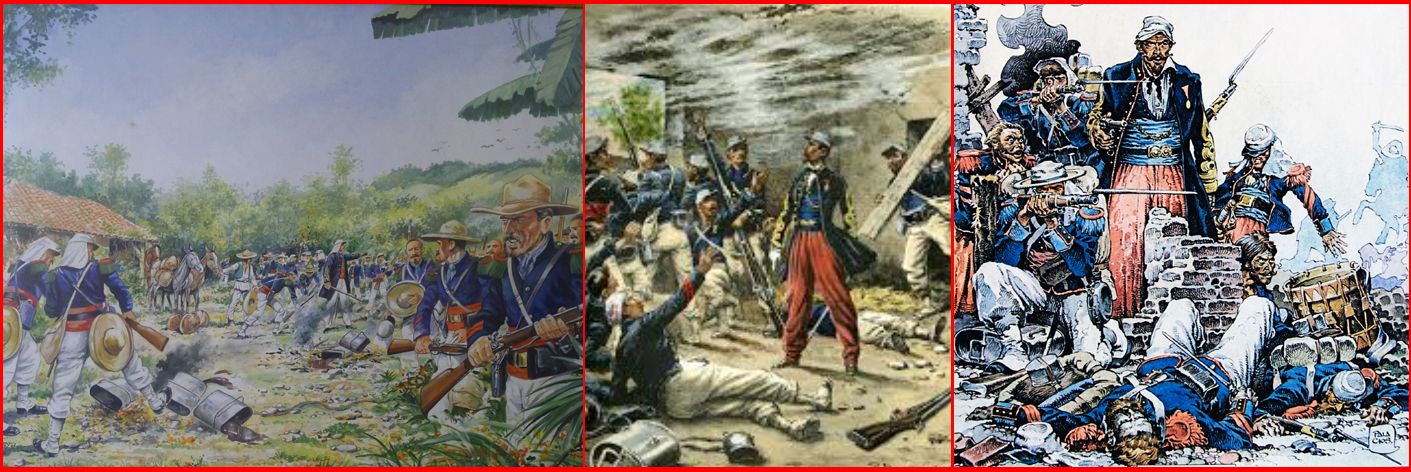
The Legion has its own literature. Like the epic poems of the Middle Ages, it has inspired the heroic and adventurous characters we know. Since its creation in 1831, literature about the Legion has traversed so many lands, won so many battles, inspired so many sacrifices, created so many legendary figures, and given refuge to so many human beings that it deserves to have its own stories, novelists, and poets.
Much has been written about "Camerone," which is on every legionnaire's priority list this month. It is also true that the sacrifice of these legionnaires, overwhelmed by a Mexican horde, is very moving to read, but many other less well-known and less celebrated events also took place, and historians find in them a sense of discovery and sincerity, a striking realism that often makes one feel as if they were there themselves…
It's like a firsthand account…
Thus, these stories and anecdotes are published in a much-appreciated simplicity of style. These works are essential witnesses, and for many of them, they do not stray too far from the reality of the events as they are revealed in their writings.
The place that the Legion occupies in the realm of literature must be recognized because it honors one of the finest expressions of the human spirit... Read more...
The Legion has its own literature. Like the epic poems of the Middle Ages, it has inspired the heroic and adventurous characters we know. Since its creation in 1831, literature about the Legion has traversed so many lands, won so many battles, inspired so many sacrifices, created so many legendary figures, and given refuge to so many human beings that it deserves to have its own stories, novelists, and poets.
Much has been written about "Camerone," which is on every legionnaire's priority list this month. It is also true that the sacrifice of these legionnaires, overwhelmed by a Mexican horde, is very moving to read, but many other less well-known and less celebrated events also took place, and historians find in them a sense of discovery and sincerity, a striking realism that often makes one feel as if they were there themselves…
It's like a firsthand account…
Thus, these stories and anecdotes are published in a much-appreciated simplicity of style. These works are essential witnesses, and for many of them, they do not stray too far from the reality of the events as they are revealed in their writings.
The place that the Legion occupies in the realm of literature must be recognized because it honors one of the finest expressions of the human spirit... Read more...
Reflexions
The Sacred and Man,
What Remains When Everything Has Been Given
By Louis Perez y Cid
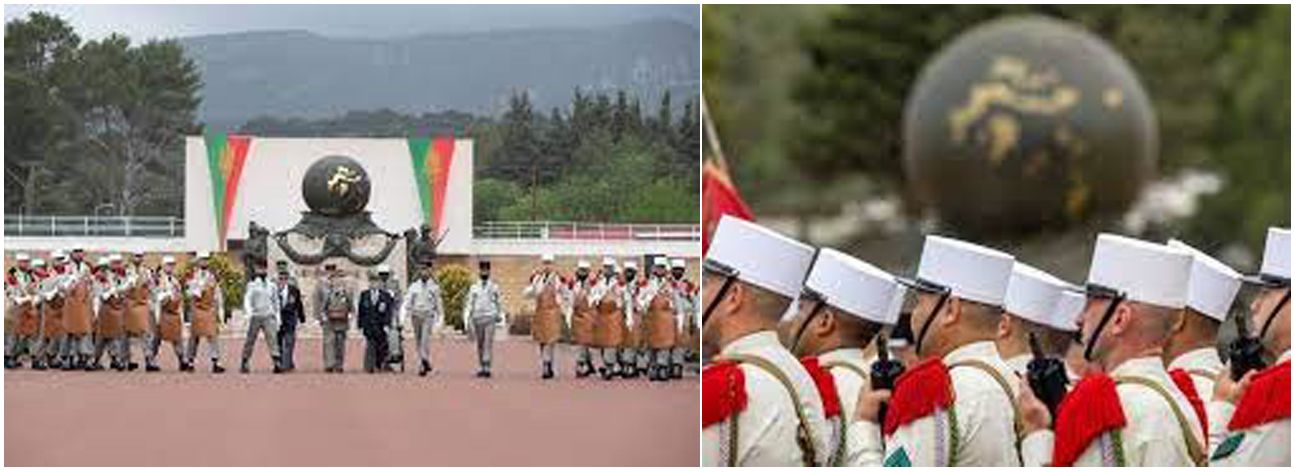
He had worn the white kepi for years.
He had known the dust that clings to the skin, the heat that crushes the will, the endless marches where the body gradually fades behind the sole decision to move forward. Above all, he remembered the silences, those heavy, almost pregnant silences, where words become useless.
He had seen men from everywhere. Different languages, battered histories, sometimes broken gazes. And yet, side by side, they held together. Bound by something ineffable, something that cannot be explained but is immediately recognizable.
And then, one day, without fanfare, almost without a sound, he understood what that word meant: the sacred. The sacred was not what he had once believed. ...Read more...
He had worn the white kepi for years.
He had known the dust that clings to the skin, the heat that crushes the will, the endless marches where the body gradually fades behind the sole decision to move forward. Above all, he remembered the silences, those heavy, almost pregnant silences, where words become useless.
He had seen men from everywhere. Different languages, battered histories, sometimes broken gazes. And yet, side by side, they held together. Bound by something ineffable, something that cannot be explained but is immediately recognizable.
And then, one day, without fanfare, almost without a sound, he understood what that word meant: the sacred. The sacred was not what he had once believed. ...Read more...
Share your point of view
Response to PYC's Editorial on "The Famous Women's Section"
By Christian Morisot
Louis offers us a beautiful reflection that touches on a real controversy: the place of women within our veterans' associations. I am reminded of the reaction during the vast period between the two World Wars, when a married man could not be considered a good non-commissioned officer in the Legion simply because he was "handicapped" by having something to lose, which placed him on the margins of what was expected of the legionnaire's ferocious fighting spirit and his disdain for death.
In a book about the wives and partners of legionnaires, "Valiant Women," Maylis Lardet and Marie-Laure Vincensini present a testimony that brings to light those who are in the shadows of the light within our community, our "Legion family."

Another book: "Dad, Why Are You Leaving?" Marion Maloigne's statement also answers a question posed by a child in an essential dialogue between parents and children.
But let's not get sidetracked; PyC, in his remarks, justifies, defends, and explains the reasons for a women's section within the association he presides over. This initiative is, in fact, a reaction, among other things, to a text written by an officer, the regional delegate of the FSALE (Federation of Former Legionnaires' Associations), who outlines a vision of veterans' associations that seems, as Antoine Marquet so aptly puts it, "frozen in the cement of the last century, while the world has shifted into hyper-connectivity and individual autonomy." ... Read more...
But let's not get sidetracked; PyC, in his remarks, justifies, defends, and explains the reasons for a women's section within the association he presides over. This initiative is, in fact, a reaction, among other things, to a text written by an officer, the regional delegate of the FSALE (Federation of Former Legionnaires' Associations), who outlines a vision of veterans' associations that seems, as Antoine Marquet so aptly puts it, "frozen in the cement of the last century, while the world has shifted into hyper-connectivity and individual autonomy." ... Read more...
Literary Explorations
ERWIN
Legio Patria Nostra
By Louis Perez y Cid.
A book by Martine Trouillet.
Erwin was seventeen when he left St. Gallen, his family, without explanation, to go to Austria and join the French Foreign Legion. There, he discovered another life: military campaigns, Indochina, Algeria, and silent loyalty.
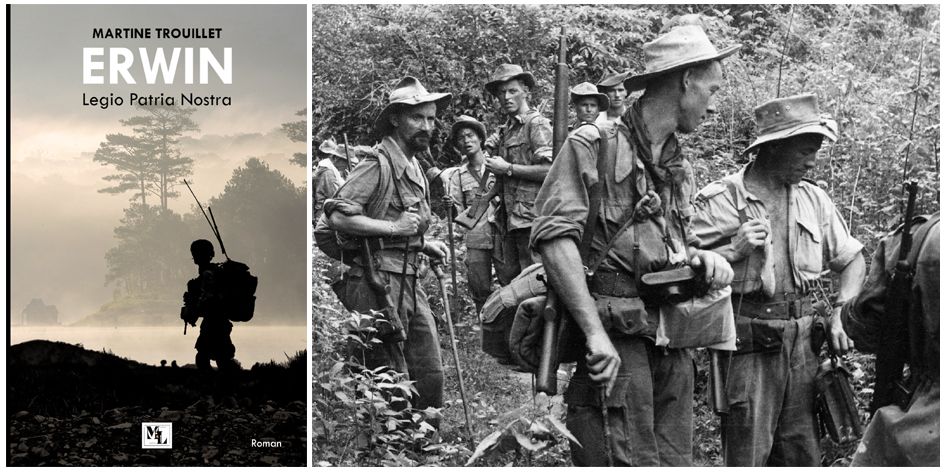
Years later, he settled in France. Life flowed by quietly. At the end of his life, he chose Clémence as his heir. She never really knew him. He had shared her mother's life for a time, without ever fully taking her place. ...Read more...
All this is happening above our heads
The Distance to the Stars
By Michel Gravereau
With modern geolocation instruments, GPS in particular, it is easy these days to know exactly where we are.
But as soon as we leave Earth, distances seem to increase at a considerable rate, and the units known on Earth for calculating distance seem quite insignificant in space.
On Earth, dragging a topographical line behind us, like a legionnaire in French Guiana during a deep-sea mission, the markers on our roads, the surveyor's measuring tape, etc., are no longer sufficient.
How can we find the distance between Earth and a planet, or a star?
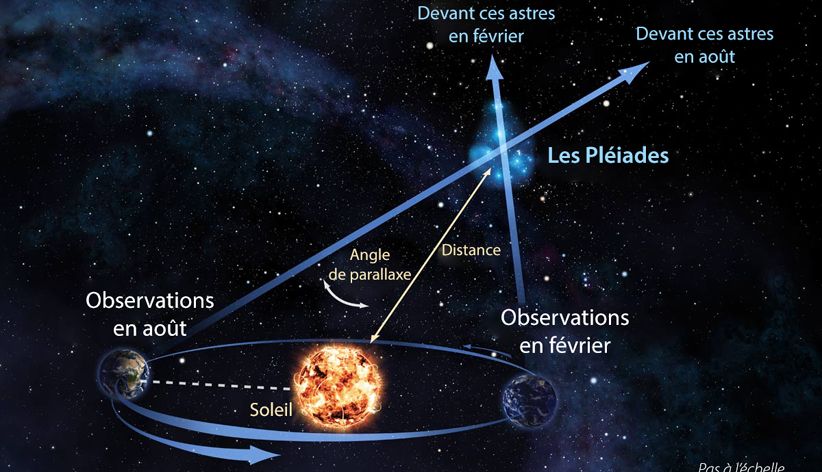
To the human eye, stars appear fixed relative to one another throughout our lives. This is only an illusion, because nearby stars move across the celestial sphere if we observe them six months apart.
In reality, this very slight movement is solely due to the Earth's movement in its orbit around the Sun, like when you travel by train and see the landscape "go by." This apparent movement is a boon for astronomers: however tiny it may be, it allows them to measure the distance to nearby stars... Read more...

.jpg?t=2704f2f3_c84a_4e75_a7c0_5a3e42556685)
Don't miss any of our publications and creations!
WHO WE ARE
Légion’Arts is an independent publishing house created by former legionnaire artists: preserving and sharing the memory of the Foreign Legion through authentic, human, and inspiring works. Every legionnaire has a voice. With Légion’Arts, these stories become a collective memory, accessible to all.